


Wilmington is taking a fresh look at its tree rules. According to a Port City Daily report published Nov. 2, 2026, the city recently convened developers, landscape architects, arborists, environmental advocates, and affordable housing leaders to give the Wilmington Tree Commission feedback on the current tree ordinance and ideas for improving it.
No changes have been proposed for a vote yet, and the city didn’t give Port City Daily a timeline. But if you own a home in Wilmington, are thinking about buying one, or have your eye on a lot to build on, the conversation is worth following. Here’s what’s being discussed and what the current rules mean for you today.
What the City Is Reviewing
Under the current ordinance, developers who remove protected trees have to mitigate it, either by replanting at a 200% rate or paying a fee, Port City Daily reported. The panel’s big-picture message was that tree rules should work alongside the city’s other priorities, including housing, natural areas, flood mitigation, parking, and stormwater, rather than as a one-size-fits-all formula.
Ideas raised during the discussion included:
- Clearer planting lists. Ranking recommended trees, with incentives for native species and a list of trees not to plant, such as invasive species, and making sure the listed trees can actually be bought.
- Looking at the whole site. Evaluating preservation across a lot instead of counting trees removed and replanted one by one, and possibly giving credit for saving groups of trees.
- Canopy, not just tree counts. The Alliance for Cape Fear Trees says the city’s tree canopy dropped from 48.1% in 2016 to 41.4% in 2020.
- Root zone rules. Today, disturbing 20% of a tree’s critical root zone during development counts as removal and triggers mitigation, which one advocate suggested revisiting.
- Different standards for different lots. Most panelists supported treating small infill sites differently from large tracts.
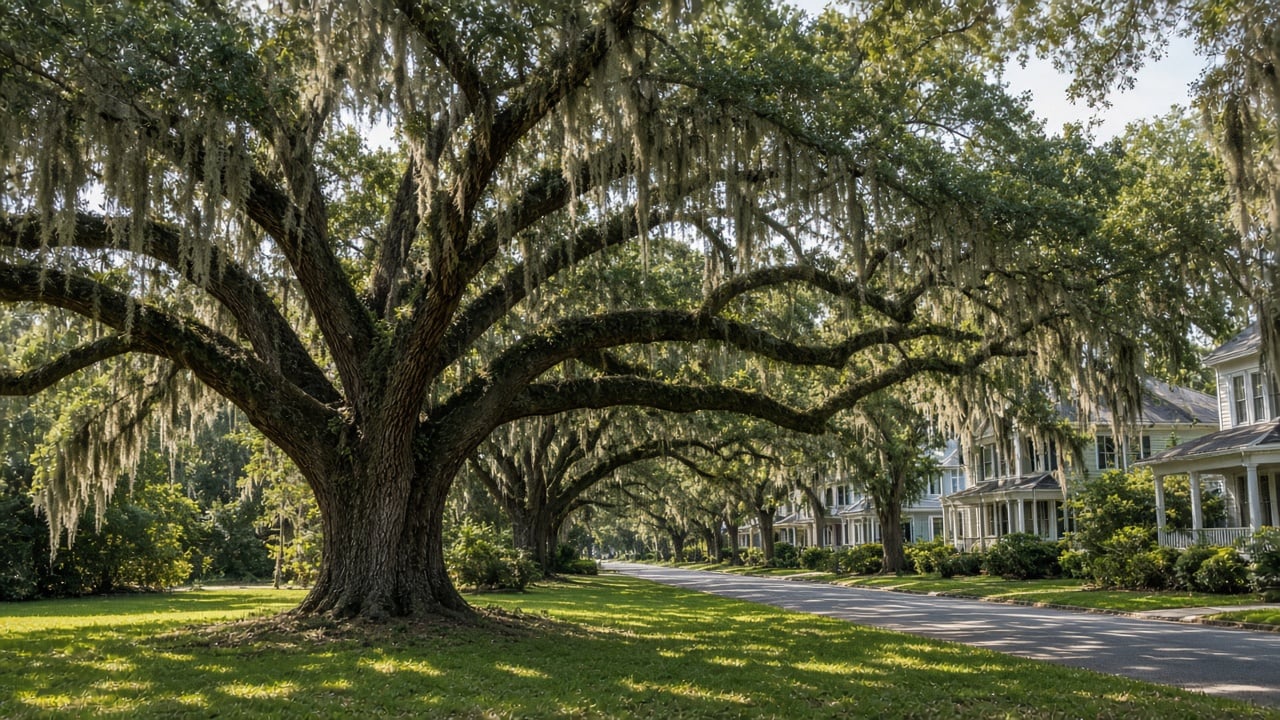
The discussion also touched on the Hillcrest redevelopment downtown, where the Wilmington Housing Authority received a variance to remove six century-old live oaks and the city has said it won’t waive the estimated $122,000 in mitigation fees. That project shows how tree rules, housing goals, and project costs are tied together in Wilmington.
What the Current Rules Mean for Homeowners
Many homeowners assume they need a permit to take down any tree. In Wilmington, it depends on where the tree is and what kind of lot you have. According to the City of Wilmington’s tree removal page, a permit is required for trees 4 inches or more in diameter at breast height when they are:
- On non-residential lots
- On residential lots larger than 1 acre
- Within a conservation resource setback or protective buffer
- In a local historic district, regardless of lot size (where a Certificate of Appropriateness is also required)
Any tree in the public right-of-way needs a permit too. The city also says Board of Adjustment approval is required to remove specimen trees, which include large live oaks and certain cypress and longleaf pines, in every zoning district except industrial. The city lists mitigation at $175 per caliper inch where mitigation is required.
Bottom line: if you live in a historic district, own a larger lot, or have a big live oak, check with the city before you call the tree crew. A quick question up front is much cheaper than a mitigation bill later.
What It Means for Buyers
Mature trees are part of the value
Shade trees are a big part of what makes neighborhoods like Forest Hills, Carolina Heights, and parts of Midtown feel the way they do. They can cut summer cooling costs and add curb appeal. They also come with upkeep, and in a hurricane-prone area, a big tree close to the house is worth a closer look.
Questions to ask during due diligence
- Is the home in a local historic district or near a conservation resource like a creek or wetland?
- Are there specimen-size trees on the lot, especially live oaks?
- Has the seller had an arborist look at large trees near the roof, driveway, or septic or sewer lines?
- Have any trees been removed recently, and were permits pulled where needed?
- Will your insurance company have concerns about overhanging limbs?
Your due diligence period is the right time to bring in an arborist if a large tree is close to the house.
Buying a lot to build on
If you’re buying land or a teardown inside city limits, tree rules can shape where the house goes and what the site work costs. Ask your builder to review the tree preservation requirements before you finalize plans. Any future ordinance changes could affect this, so it’s worth keeping an eye on what the Tree Commission recommends.
What It Means for Sellers
If you’re getting ready to list, healthy trees are an asset, so show them off. Trim dead limbs, clear branches off the roof, and keep any arborist reports handy for buyers. If you’re thinking of removing a tree before you sell, check whether it needs a permit first, especially in a historic district.
What to Watch Next
The panel’s feedback goes to the Wilmington Tree Commission, and any formal changes to the land development code would go through the city’s public process before City Council. We’ll keep an eye on it and share updates when a proposal takes shape.
FAQ
Do I need a permit to remove a tree from my yard in Wilmington?
It depends. Based on the city’s tree removal page, permits are required on residential lots over 1 acre, in local historic districts, within conservation resource setbacks or buffers, and in the public right-of-way. Specimen trees need Board of Adjustment approval. When in doubt, ask the city first.
Has Wilmington changed its tree ordinance?
Not yet. As of Port City Daily’s Nov. 2, 2026 report, the city was gathering feedback and had not shared a timeline for changes.
Do these rules apply in Brunswick or Pender County?
No. These are City of Wilmington rules. Other towns and counties have their own, so check locally.
What is a specimen tree?
It’s a tree of exceptional size, form, or rarity under city code, such as a large live oak. Removing one requires a variance from the Board of Adjustment.
Talk to a Local Team
Buying or selling in Wilmington means knowing the details that don’t show up in the listing, from flood zones to tree rules. If you have questions about a specific home, lot, or neighborhood, reach out to the Aspyre Collective team. We’re happy to help.